
The Clearing
A free live room for coaches, mentors, consultants and advisors, led by Saqib Rasool.
Become an indispensable coach in the era of AI.
Ninety minutes on the job no machine can do, and on the state you walk into the room with, which does more work in a session than your method does. Bring one real situation from your own practice. You will leave able to see it, and with a way of preparing yourself before the conversations that matter.
You attune everyone else. Who attunes you?
This is the first one. Whether it runs again depends on what happens in it.
People are taking their lives to AI for coaching.
AI is reorganizing one industry after another, and ours is not exempt. Some of these tools are doing a decent job of it. Some are doing a poor job and people are getting hurt. Either way it is happening at scale, every hour of every day, and no argument from our field is going to reverse it.
So the question in front of every coach is not whether to feel good about this. It is this: what is the job that is still yours, how do you stand apart from what a machine can do, and how do you use these tools so that you thrive in this era rather than struggle through it.
There is a job here that no machine can do. AI cannot care. It cannot actually listen. At its best it is an extension of the care of the people who built it, and it is still a machine. It is your job to care about someone, to stay with them, to push them toward what they are capable of, to hold them to what they said they would do, and to be there when the thing they are facing is real. Nobody can automate that.
What we have found is that an AI built for this purpose can help you attune your own thinking and moods, so that you become a clearing for your clients. It is there at any hour, including the five minutes before a session when something has gone wrong in your own day. Coaches already use COROS in exactly that window, to come back to what matters, to choose the mood and the listening they want to bring, and to set down the self doubt so the person in front of them has all of their attention.
Used that way, AI does not take your place in the room. It prepares the person who walks into it.
That is what this room is for. Taking back ownership of the job that is yours, and becoming an indispensable coach in the era of AI.

Coaches, mentors, consultants and advisors who are serious about getting radically better at the work itself.
They have clients. They are past the beginning and not yet the practitioner they have committed to become, and they are hungry about the gap in between.
They want to be among the best at this, not just better at marketing it. They are the ones who go back over a session in their mind afterward and wonder what they missed. They know they will stay in demand only as long as their clients leave transformed.
Nobody is there to prepare the practitioner at the moment they need it. They prepare for the client's situation, then arrive carrying whatever the day handed them, and the client receives the effect of that without anyone naming it.
- There is too much noise in the head to get fully present to the person in front of them. This quietly kills more practices than any shortage of clients does.
- Moods that block or destroy good work have gone unnamed, and so they go unaddressed.
- They know moods are infectious. They move from session to session without clearing, and carry what one client left behind into the next room.
- Their concern about their own performance in the session crowds out the listening and attunement the work requires.
- They want to work with their own anxiety well, and turn it into energy for the client rather than noise.
- Their clients love them for the value they deliver, and still they fall into the fear that they are not enough for what this person is bringing, with nobody to work it out with.
They tune everyone, and nobody tunes them.
And the question of the era sits underneath all of it, unanswered. As these tools get better, what makes a human coach indispensable to their clients? Most people in this field are managing that question by not looking at it.
You will leave with:
-
A breakthrough in the one situation you have not been able to get clear about.
Bring a real situation from your own practice, a client you are stuck with or a decision you keep circling, and work on it in the room until you can see it.
-
A practice for preparing yourself before a conversation that matters.
A coach is a polished mirror. You will learn how to polish yours in the minutes before a session, so that you arrive clear instead of arriving with whatever the day handed you, and so that you can take care of a great many people without being infected by what they carry.
-
A different mood to work from.
You will set down the self doubt, the hysterical industriousness and the thought that you are not good enough, and leave in a mood of ambition, joy and passion.
-
Contact with the wellspring of your work, which is your care.
What matters to your clients is not your degrees or your certification. It is your care, your intuition and your courage, and you will learn to tune into that capacity deliberately rather than hoping it shows up on the day.
-
A sharper eye for what is actually going on with a client.
You will learn to make a powerful diagnosis: to see what situation a client or an organization is really in, the waste in it, how they came to be there and what is holding them there. That diagnosis gives you a place to stand with them, and it opens larger work.
-
A way of working with AI rather than bracing against it.
You will stop seeing AI as your competitor and learn a particular use of it that helps you attune yourself and stay present with your clients, with free access to an AI built for this that goes on doing it with you after the session ends.
You will also leave in the company of peers working on the same question, thriving in this era rather than surviving it.
You work. Saqib listens.
- Saqib opens with a short discourse. Why the people who help others matter especially in these years, what these machines have actually changed, and why the state you walk in with is doing more work in a session than your method is.
- He opens the floor and works live with the people who want to speak.
- Everyone takes their own murkiest situation into COROS and works with it privately. Nothing you write is seen by anyone unless you choose to share it.
- Back together, and the room hears what happened.
- Breakout rooms in pairs, where you do for each other what has just been done for you.
- Closing. A few share, and Saqib names the one thing he asks of you before your next session.
There is no catch.
Nobody is going to replace your method. Your method is yours. We work on the person who uses it.
The room is free, the AI you use inside it is free, nothing is offered at the end, and nobody will call you afterward. If you take the ninety minutes and we never hear from you again, that is a completely fine outcome.
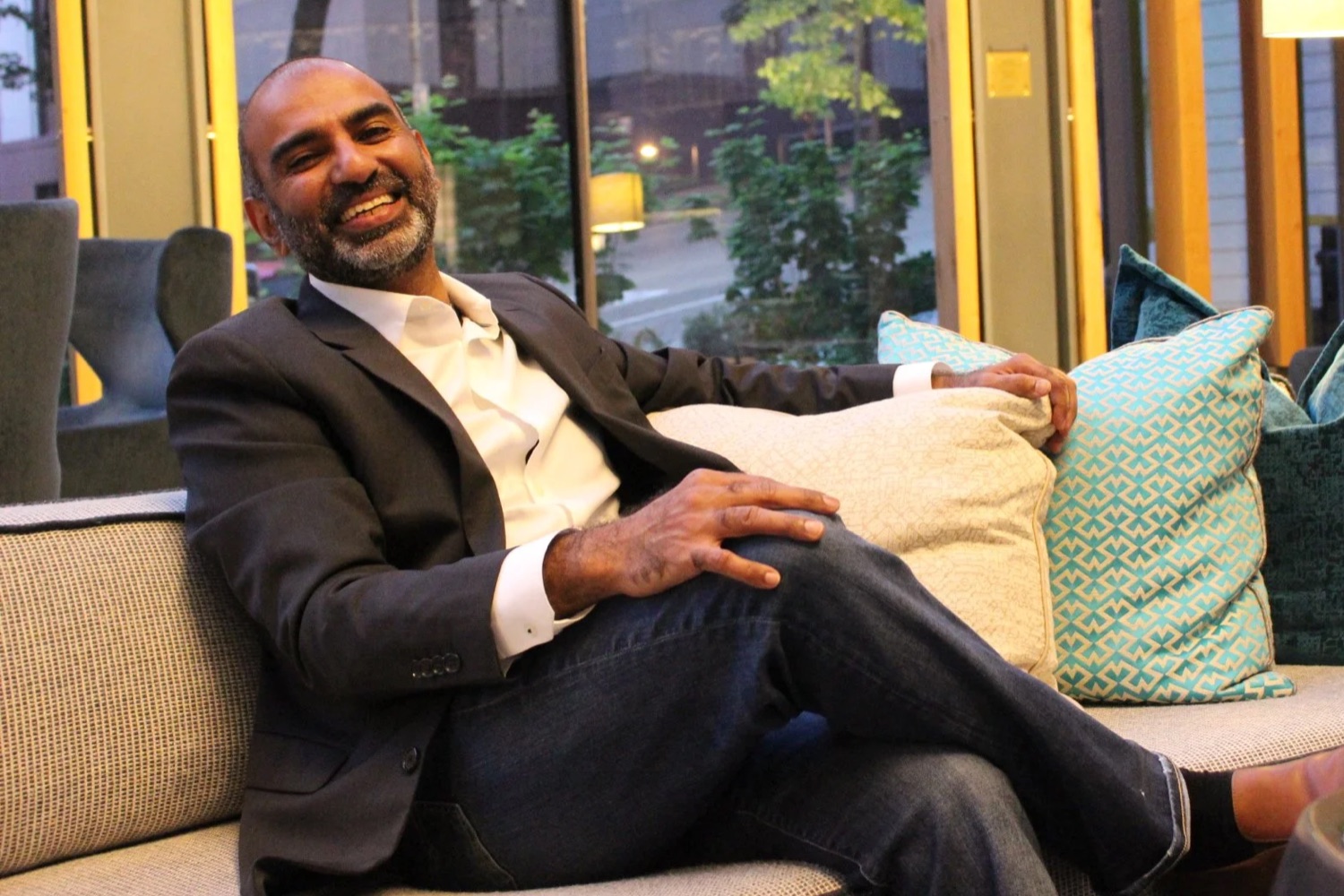
Saqib Rasool
Saqib has spent his working life helping the people who help others. He studied for years with the people who shaped this tradition, Dr. Fernando Flores, Chauncey Bell, Dr. James McManis and Dr. Peter Yaholkovsky, and he has worked with master coaches, mentors, consultants and advisors on their readiness, their offers, their practices and their identities.
He also built COROS AI, which is already doing this work with coaches every day. Many of them open COROS before a session, say they are about to go into a difficult conversation and feel nervous, and ask for help getting ready. They come back afterward to debrief it. In their own words they tell us the same thing: they coached better, they listened better, they were more present, the noise in their own heads went down, and they got their concern about themselves out of the way so the person in front of them could have all of them.
Saqib is not leading this room from a place of knowing better, but from a profound care for the people who become a guiding light in the lives of others.
- When
- Tuesday, October 13, 2026
- Time
- 1:00 PM Pacific in is 4:00 PM Tue, Oct 13
- Length
- Ninety minutes on Zoom
- Cost
- Free
- Bring
- One real situation from your own practice, and a COROS account. Free to open at app.coros.ai, no card.
- Replay
- Everyone who registers receives it.
Ninety minutes. Bring the situation you have not been able to get clear about, and leave able to see it.